
On the Third Day Renewal and Formation Center

Facilitator
Lita Quimson-Feliciano
Founder & Executive Director
Contact Information
August 21 - Saturday
Book distribution
August 28 - Saturday
Chapter 1:The Nature of Grief
Chapter 2: The Initial Shock
Chapter 2: The Initial Shock
September 4 - Saturday
Chapter 3: Denial and Isolation
September 11 - Saturday
Chapter 4: Anger and Frustration
Chapter 5: Bargaining and Guilt
Chapter 5: Bargaining and Guilt
September 18 - Saturday
Chapter 6: Depressionand Sadness
Chapter 7: Acceptance and Hope
Chapter 7: Acceptance and Hope
September 25 - Saturday
Chapter 8: Integration and Transformation
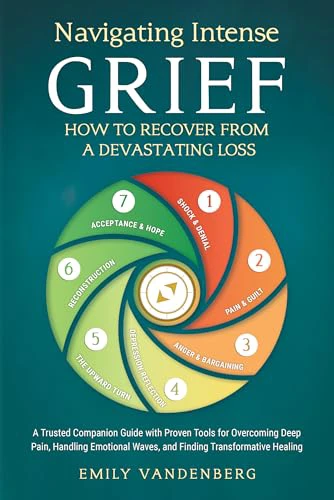
Navigating Intense Grief by Emily Vandenberg
Emily Vandenburg’s Navigating Intense Grief: How to Recover from a Devastating Loss is not simply a book about recovering from loss, but as an invitation to learn how God can meet us in the places where life has broken open. Grief is not limited to bereavement. It teaches us how to accompany ourselves and others whenever something precious is lost—people, relationships, health, dreams, identity, security, a way of life, or even an image of God. Grief is one of the great teachers of the human heart.
We often want to avoid grief, move quickly through it, or tell ourselves that we should be strong enough to overcome it. Yet grief asks something different of us. It asks us to stop, feel, remember, acknowledge, and slowly learn how to live with what has changed.
This is why learning about grief is so important for formation. If we do not understand grief, we may misunderstand ourselves. We may judge our emotions, suppress our anger, run away from our sadness, or become impatient with the process of healing. We may even mistake our struggles for a failure of faith. Understanding grief helps us recognize that our emotions are not enemies to be conquered. They are invitations to listen.
Grief helps us become more self-aware
Every significant loss reveals something about what we love, what we value, what we fear, and what we have become attached to. Ignatian spirituality asks us to become aware of our attachments so that we can gradually become free to desire what God desires for us. Grief can expose those attachments with
extraordinary clarity.We begin to ask:
What am I holding on to?
What have I lost?
What am I afraid to surrender?
What has this loss revealed about me?
Where is God inviting me toward greater
freedom?Grief can be a gift
Sign up for this program
Take a moment to reconnect with yourself, find inner peace, and embrace spiritual growth. Reserve your place in this transformative retreat.
Contact Information